


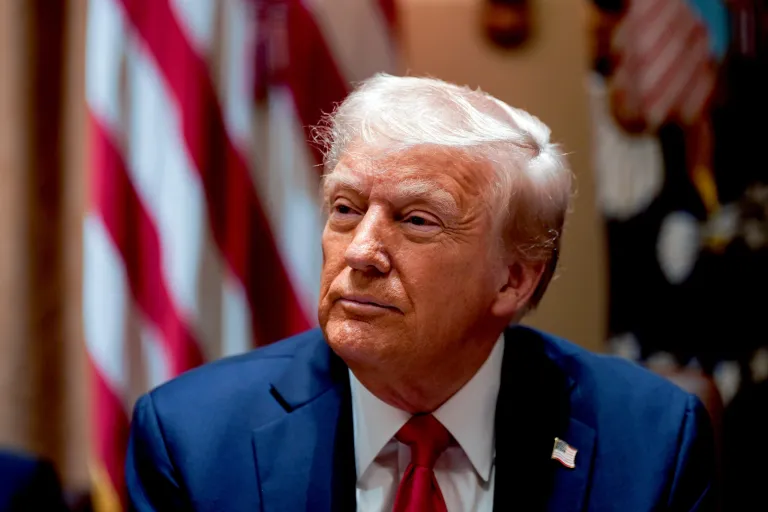
US President Donald Trump used a televised White House speech to repeat claims that China interfered in the 2020 US election. He said new intelligence showed weaknesses in the election system and called for more investigations. However, he did not present verified evidence that foreign actions changed the election outcome.
Trump said fair elections are the foundation of a strong country. He argued that Americans must trust the voting process. He also claimed that election systems were open to outside threats and needed stronger protection.
The speech lasted about 25 minutes and focused mainly on election security. Trump said he wanted intelligence agencies to investigate why information about possible election risks was not shared earlier. He also called for action against anyone found responsible if wrongdoing was proven.
Trump said he was ordering the Office of the Director of National Intelligence, the Department of Justice, the FBI, and the CIA to review the matter. He said officials should determine whether any important intelligence had been hidden from the public or lawmakers.
The president also renewed his support for the Save America Act. The proposal would require stricter voter identification rules and other election security measures. Trump urged Congress to approve the bill, saying stronger safeguards would improve public confidence in future elections.
Several Democratic leaders quickly rejected Trump’s statements. They said multiple investigations, audits, court rulings, and reviews by election officials have already examined claims about the 2020 election. According to them, those reviews found no evidence that widespread fraud changed the election result.
Democratic Senator Mark Warner said foreign governments such as China, Russia, and Iran remain security concerns. However, he said any discussion about election threats should be based on verified facts instead of political arguments.
Before the speech, a spokesperson for the Chinese embassy denied Trump’s allegations. The spokesperson said China has never interfered in US presidential elections and does not plan to do so in the future.
Trump questioned earlier assessments made during his first administration. He argued that intelligence officials failed to properly inform him about possible election security concerns. He said the newly released information raised important questions that deserved further review.
Reports surrounding the released documents also became part of the debate. One adviser involved in reviewing the material later acknowledged that the documents did not show evidence that foreign governments changed votes in the 2020 election. That statement became a key point for critics who argued that Trump’s claims remained unsupported.
The speech came as attention also remained on other national and international issues. However, Trump spent only a short time discussing foreign policy before returning to election security and voting laws.
Television coverage of the address also drew attention. Some major broadcasters chose not to carry the speech on their main television channels. Others streamed it through digital platforms. The decision led to criticism from Trump, who argued that the public should have direct access to presidential remarks.
Media experts noted that US television networks are not required to broadcast every presidential address live. Similar decisions have been made during previous administrations under both Republican and Democratic presidents.
The event included several senior administration officials and members of Trump’s cabinet. Vice President JD Vance was among those present in the audience during the address.
Political observers expect the debate over election security to remain active as the country moves closer to the congressional midterm elections. Republicans continue to push for tighter voting rules, while Democrats argue that existing election systems are secure and that changes should not reduce voter access.
The latest speech shows that the 2020 election remains a major political issue. Supporters say stronger election laws will improve confidence in the voting process. Critics argue that repeated claims without verified evidence may reduce public trust. As lawmakers continue to debate election policy, the issue is expected to remain at the center of national political discussion in the months ahead.
