


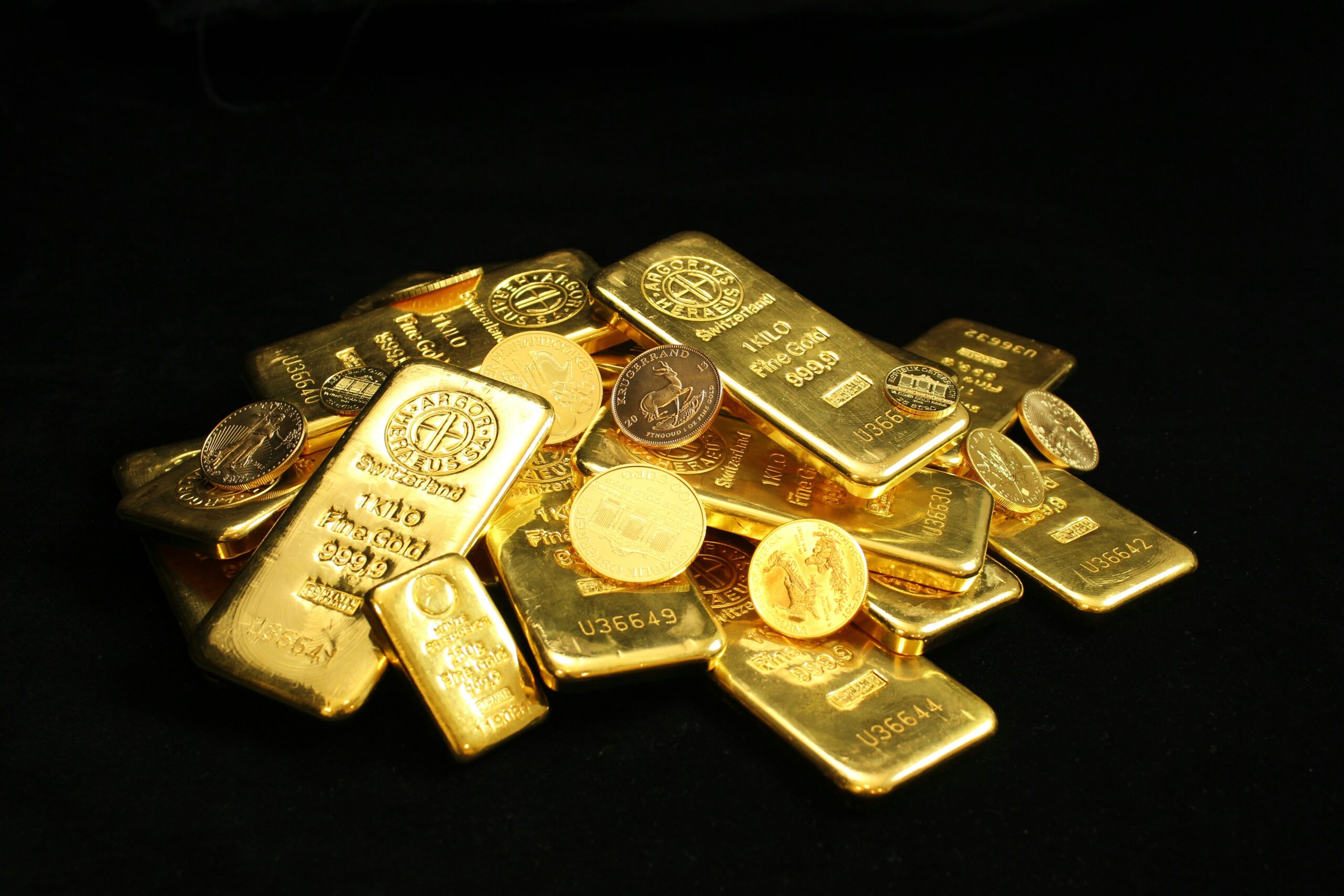
Precious metals have emerged as some of the strongest performers in 2025, propelled by rising geopolitical risks, expectations of looser monetary policy, and ongoing global economic uncertainty. Gold climbed to unprecedented heights this year, reaching as much as $4,481 (€3,797) per troy ounce — a 55–70% increase year-on-year and one of the most powerful annual rallies in decades. Silver, often seen as gold’s secondary counterpart, outpaced its sibling in percentage terms, gaining roughly 130–140% and hitting record levels near $69 (€58) per ounce by late 2025.
Once considered a historical safe haven that gave way to currencies, bonds, and real estate, precious metals staged a dramatic comeback. A year defined by tit-for-tat tariffs, central banks diversifying away from the US dollar, and persistent political instability fueled investor demand. This week, gold jumped as much as 2.4% and silver rose 3.4% amid escalating tensions between the US and Venezuela, particularly after reports of the US Navy attempting to seize a third oil tanker linked to the South American country.
Why Venezuela Matters to Markets
Gold prices are not directly tied to Venezuela, but the situation signals broader risks to investors. Political and security crises such as the Venezuela standoff illuminate overlapping threats — energy supply disruptions, sanctions escalation, and potential great-power conflict. In these circumstances, gold and silver appeal because they are not controlled by any single government, do not rely on corporate earnings, carry no default risk, and are difficult to sanction or freeze.
January–March: Tariffs and Early Safe-Haven Demand
Gold began the year elevated, reflecting concerns about inflation, interest rates, and spillovers from Russia’s ongoing invasion of Ukraine. In March, prices surged above $3,000 (€2,544) per ounce for the first time in 2025, fueled by fears of new and expanding US tariffs under President Donald Trump, particularly on steel, aluminium, and potential broader trade measures. Markets interpreted the move as a signal of an intensifying trade war and rising inflation, prompting investors to buy gold as a safe haven. Silver reacted more cautiously at first, lagging behind gold in the initial phase of the rally.
April–June: Middle East Tensions Drive Demand
On 2 April, Trump announced his “Liberation Day” tariffs, sending gold prices toward record highs above $3,100 (€2,628) per troy ounce. Prices continued rising through spring and early summer, reaching peaks of up to $3,354 (€2,842) per ounce amid broadening geopolitical stress. Renewed tensions in the Middle East, especially between Iran and Israel, intensified the rally. In late June, the US Air Force and Navy attacked three nuclear facilities in Iran as part of the Iran–Israel conflict, further boosting demand for safe-haven assets.
July–September: Fed Disputes and Tariff Expansion Fuel Rally
A public clash between President Trump and Federal Reserve Chair Jerome Powell over interest rates strengthened gold’s mid-year momentum. Trump repeatedly criticized Powell for maintaining high rates and pressed for cuts that Powell refused to deliver, fueling speculation about potential changes to Fed leadership. Spot gold climbed above $3,400 (€2,883) per ounce through the summer, supported by both monetary policy uncertainty and ongoing global trade concerns. On 11 July, Trump announced a sweeping tariff package, largely implemented on 1 August, reinforcing central banks’ trend of increasing gold holdings for reserve diversification. Silver continued its strong performance, reaching $38.46 per ounce in mid-July.
October–November: Gold Breaks $4,000 Amid Multiple Risks
Gold cleared $4,000 (€3,392) per ounce in early October as markets weighed expectations of US Federal Reserve rate cuts against ongoing geopolitical and policy uncertainty. By 13 October, gold climbed above $4,133 (€3,504) amid US–China trade tensions. Hopes for progress in trade talks briefly pushed prices below $4,000, but the overall upward trend persisted. Investors also monitored a potential US government shutdown and continued public criticism of the Fed from the Trump administration. By late November, gold was set for its fourth consecutive monthly gain, trading around $4,210 (€3,567), while silver reached a fresh record near $56.78 (€48.12) per ounce.
December: Record Highs Amid Venezuela Crisis
Late December marked the year’s most dramatic period. Gold surged above $4,490 per troy ounce, and silver neared $70 per ounce as investors sought safe havens amid reports of US military action and attempts to seize Venezuela-linked oil tankers. Markets also factored in expectations of further Federal Reserve rate cuts in 2026, which could lower real yields and continue to support bullion, alongside a weakening US dollar, cementing 2025 as a landmark year for precious metals.
