


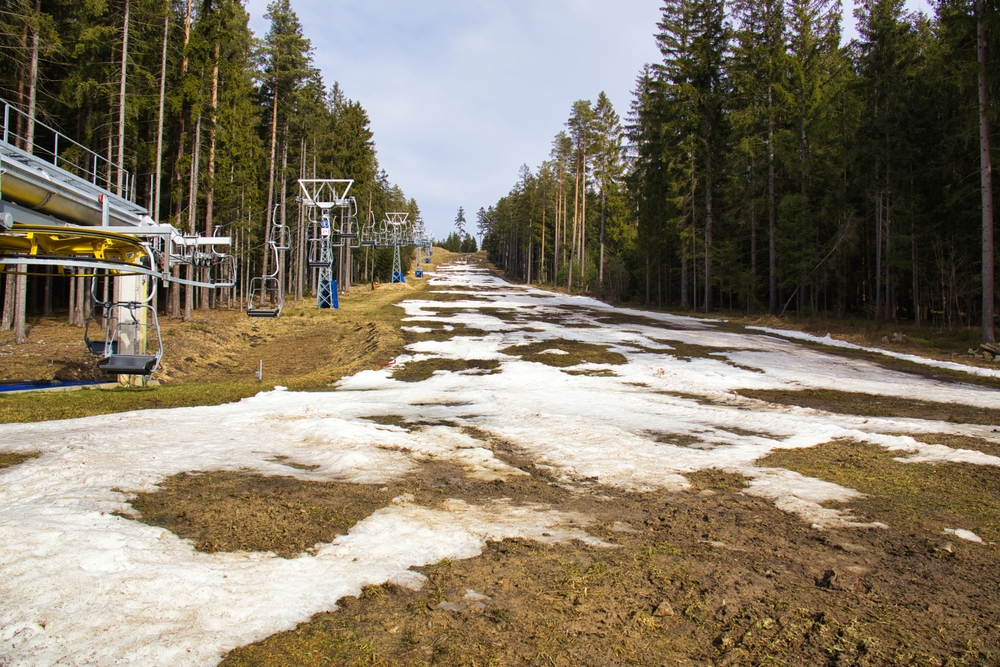
Warmer winters and dwindling snowfall are forcing Europe’s ski resorts to rethink how they do business. With rising costs and environmental pressures, winter sports are becoming less accessible, and the iconic slopes of the Alps and beyond face an uncertain future.
Snow Is No Longer Guaranteed
Even in Italy’s Dolomites, where the Winter Olympics will open in Milan-Cortina on 6 February, snow coverage is not always natural. Resorts increasingly rely on artificial snow, which comes with high energy and water costs. Snow cannons and water pumps guarantee skiable slopes but push up lift ticket prices, making skiing a more expensive experience for visitors. For many Europeans, winter sports are becoming a luxury rather than a pastime.
Climate Change Threatens the Winter Games
Climate change is not just affecting tourists — it is reshaping the very landscape of winter sports. Higher temperatures and inconsistent snowfall are impacting the entire Alpine region. A 2021 study from the University of Waterloo found that, without swift action, only four of the 21 past Winter Olympic host cities — Lake Placid, Lillehammer, Oslo, and Sapporo — will be suitable for the Games by 2050. Under worst-case warming scenarios, almost all historic locations could be snowless, leaving Sapporo as the only viable option by 2080. Even if global warming is limited to 2°C, only a handful of former host sites will remain feasible.
Water, Energy, and Rising Costs
Artificial snow comes at a heavy environmental price. Producing just 30 centimeters of snow on a one-hectare slope requires around one million liters of water — roughly the annual usage of a city of 1.5 million people. Snowmaking also consumes massive amounts of electricity, increasing greenhouse gas emissions. Supplying all Europe’s Alpine resorts with artificial snow would require around 600 GWh of energy, equivalent to the annual power consumption of 130,000 households.
These costs are passed on to visitors. Since 2015, spending on skiing in Europe has increased by an average of 34.8%, far outpacing inflation, with Switzerland, Austria, and Italy seeing the largest hikes. As snow becomes scarcer and prices rise, many popular ski destinations are becoming unaffordable for average holidaymakers, threatening the future of Europe’s winter tourism industry.
