


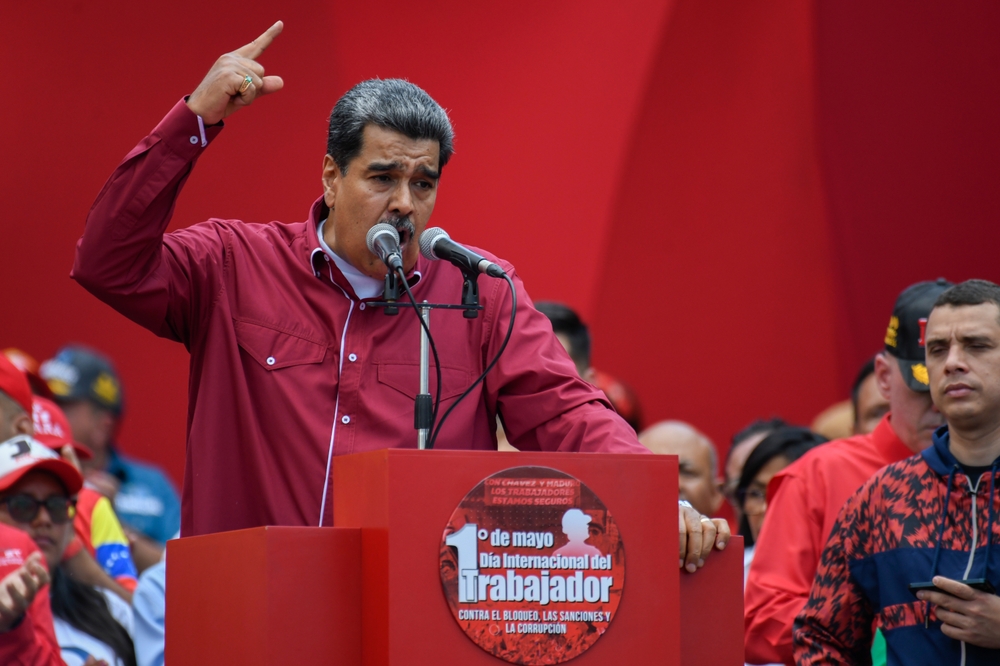
In a stunning operation that shocked observers worldwide, US forces captured Venezuelan President Nicolás Maduro and his wife, Cilia Flores, in Caracas and transported them to New York to face criminal charges. Following the arrests, President Donald Trump announced that the United States would take temporary control of Venezuela, overseeing the country until a “safe and proper” transition could be arranged.
“We can’t take a chance that somebody else takes over Venezuela who doesn’t have the good of the Venezuelan people in mind,” Trump said during a news conference at his Mar-a-Lago resort in Florida.
US to Manage Interim Government
Trump stated that Venezuela would be run “with a group,” naming Secretary of State Marco Rubio, Defense Secretary Pete Hegseth, and Chairman of the Joint Chiefs of Staff General Dan Caine as key figures in the interim administration. However, he provided few specifics about how the government would function.
At one point, Trump claimed Vice President Delcy Rodríguez had been sworn in as Maduro’s successor and was willing to cooperate with US plans, though the Venezuelan government has not confirmed this. Trump emphasized that US involvement could include military action and significant investments by American oil companies to repair Venezuela’s failing infrastructure.
“We’re not afraid of boots on the ground,” Trump said. “We’re ready to stage a second and much larger attack if needed.”
Legal Justification and Political Reactions
Secretary of State Rubio defended the operation as a law enforcement mission supported by the military, saying congressional approval was not required. Maduro had been indicted in the US in 2020, and a $50 million reward was offered for his capture, Rubio noted.
The move drew swift criticism from Democrats, who warned it set a dangerous precedent for international law. Senator Mark Warner said the operation could encourage other nations, like China or Russia, to justify similar actions, and criticized what he described as hypocrisy in contrast to Trump’s pardon of former Honduran President Juan Orlando Hernández, convicted of drug trafficking.
Republican lawmakers, meanwhile, praised the action. Senator Roger Wicker called it “a successful mission” that targeted criminal networks Maduro oversaw and urged Venezuelans to work quickly toward restoring peace and prosperity.
Uncertain Future for Venezuela
Analysts cautioned that the operation could trigger serious instability. Daniel DePetris of Defense Priorities warned that potential outcomes include a split within Venezuela’s military, the rise of criminal groups, civil war, or the emergence of a new autocrat.
“The long-term impact remains uncertain,” DePetris said. “Venezuela is already a bankrupt state with a collapsing economy, and these interventions could make the situation better—or much worse.”
The Trump administration has repeatedly shifted its rationale for pressuring Maduro, citing drug trafficking, reclaiming stolen oil resources, and promoting democracy. Regardless of the justification, Venezuela has been portrayed as a direct threat to US security in the Western Hemisphere.
